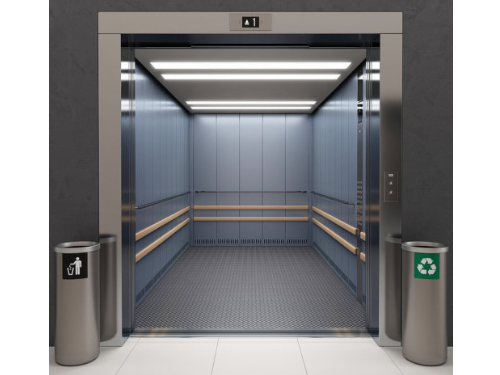
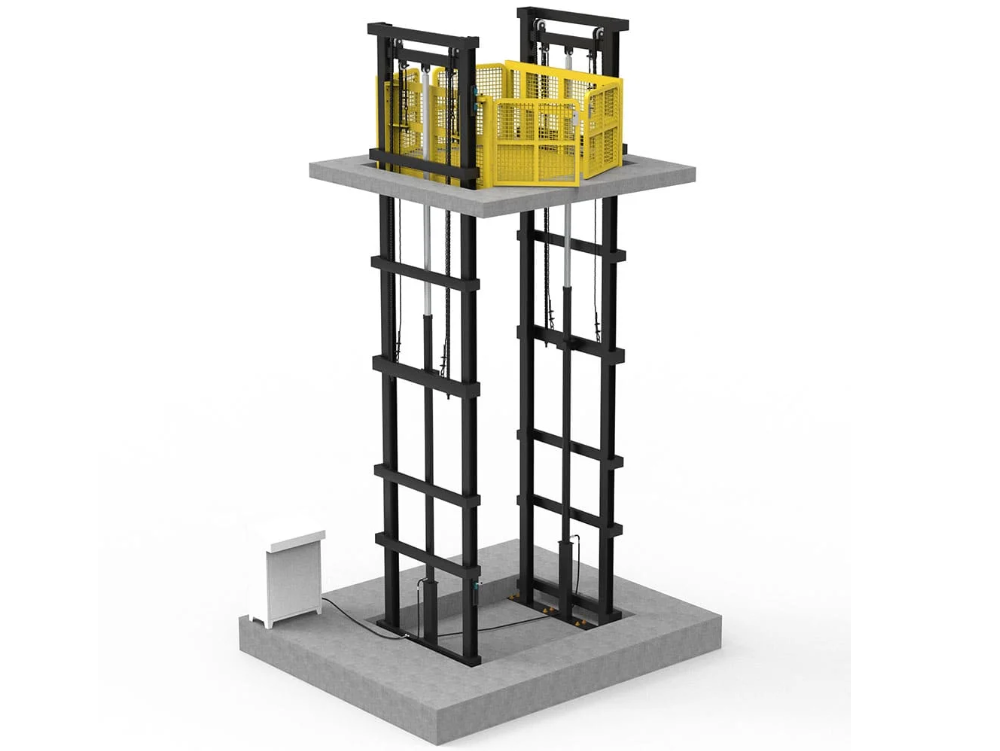
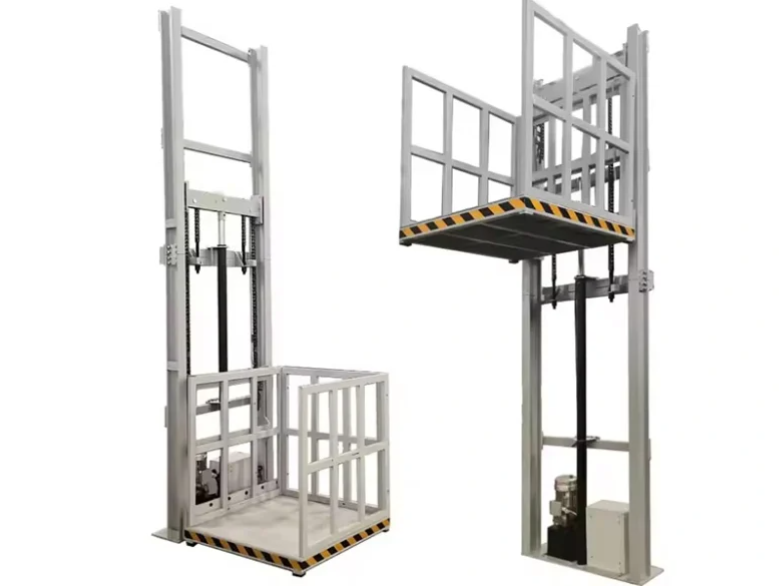
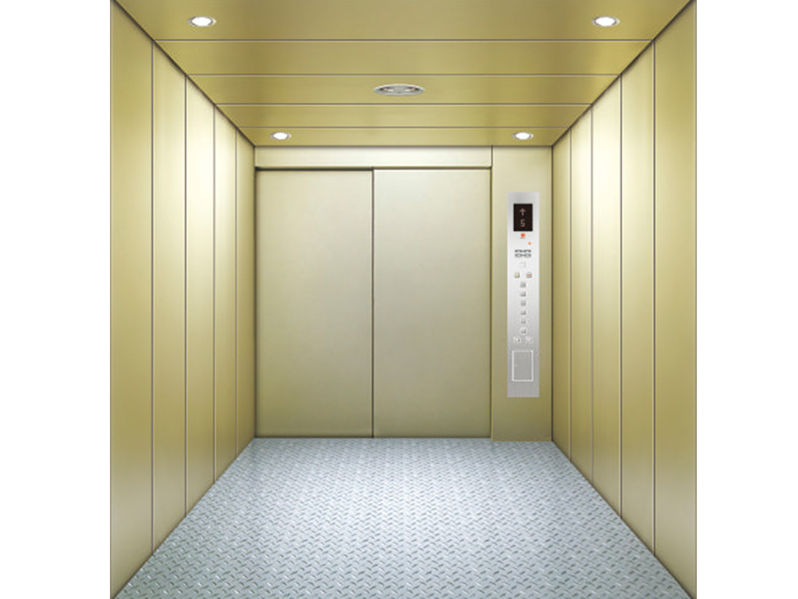
Cargo lifts (or freight elevators) are heavy-duty vertical platforms designed exclusively to transport pallets, bulky machinery, and materials between building levels, mezzanines, or warehouses. They prioritize raw lifting power, durability, and safety over passenger comfort.
Core Types of Cargo Lifts
Hydraulic Goods Lifts: Powered by an incompressible fluid-driven piston system. They do not require a rooftop machine room or a deep pit, making them highly space-efficient.
Ideal For: Low-to-medium rise industrial buildings, factories, and retail stockrooms requiring capacities ranging from 1 to 10 tons.
Resource: Review AR Equipment & Automation Cargo Lift for localized industrial specifications in Bangladesh.
Scissor Lift Tables:
Description: Utilizes an expanding crisscross scissor mechanism powered by hydraulic cylinders to raise goods.
Ideal For: Multi-level mezzanines up to 4500 mm in height, allowing manual pallet jacks to easily roll on.
Resource: Read the Translyft Goods Lift Guide for detailed ergonomic and warehouse operational setups.
Traction Freight Elevators:Uses steel ropes, counterweights, and electric motors to move the platform.
Ideal For: High-rise structures and heavy-duty manufacturing plants needing fast, high-capacity vertical transit.
Content for Technical Specifications goes here. You can add tables, lists, and detailed information about the product's features.
| Load Capacity | Typically spans ≈ 1,000 kg to over 10,000 kg. |
| Lifting Height | Ranging from simple mezzanine levels (1 m) up to multi-story industrial shafts. |
| Drive Systems | Electric motor driving hydraulic pumps, traction ropes/sheaves, or screw drives. |
| Interlocks | Access gates remain locked unless the platform is precisely leveled at the floor. |
| Trip Bars | Exterior safety bars immediately halt platform descent upon contacting an obstruction. |
| Solenoid/Check Valves | Blocks hydraulic oil loss to prevent sudden drops during a power failure. |